

Using Natural History Trends to Distinguish Responsible Species in Human–Wildlife Interactions at the Shark Bite Capital, New Smyrna Beach, Florida
Tyler B.T. Bowling*
*University of Florida, Department of Biology, 876 Newell Drive, Gainesville, FL 32611; Florida Museum of Natural History, 3215 Hull Road, Gainesville, FL 32611;Texas Agricultural and Mechanical University-Corpus Christi, Department of Life Sciences, 6300 Ocean Drive, Corpus Christi, TX 78412; tylerbowling1993@gmail.com.
Southeastern Naturalist, Volume 25, Issue 1 (2026): 11–33
First published early online: 13 February 2026
Abstract
Shark bites on humans are rare, making analysis of trends and mitigation strategies difficult. However, New Smyrna Beach (NSB), FL, has the most recorded shark bites globally since the 1800s. Wounds at NSB match bite patterns of the coastal species Carcharhinus limbatus (Blacktip Shark) and Carcharhinus brevipinna (Spinner Shark), but their similar bite-mark morphology makes identification impossible from this criterion alone. As a result, International Shark Attack File (ISAF) records for the southeast are largely unattributable to specific species. Using natural- and life-history characteristics such as parturition, habitat and nursery preference, prey species, and migratory patterns, along with ISAF records for environmental trends, I attribute most NSB bites to Blacktips. Identifying the species involved in human–wildlife interactions is a first step towards understanding risk factors and developing regional mitigation strategies.
 Download Full-text pdf (Accessible only to subscribers. To subscribe click here.)
Access Journal Content
Open access browsing of table of contents and abstract pages. Full text pdfs available for download for subscribers.
Issue-in-Progress: Vol. 25( 2) ... early view
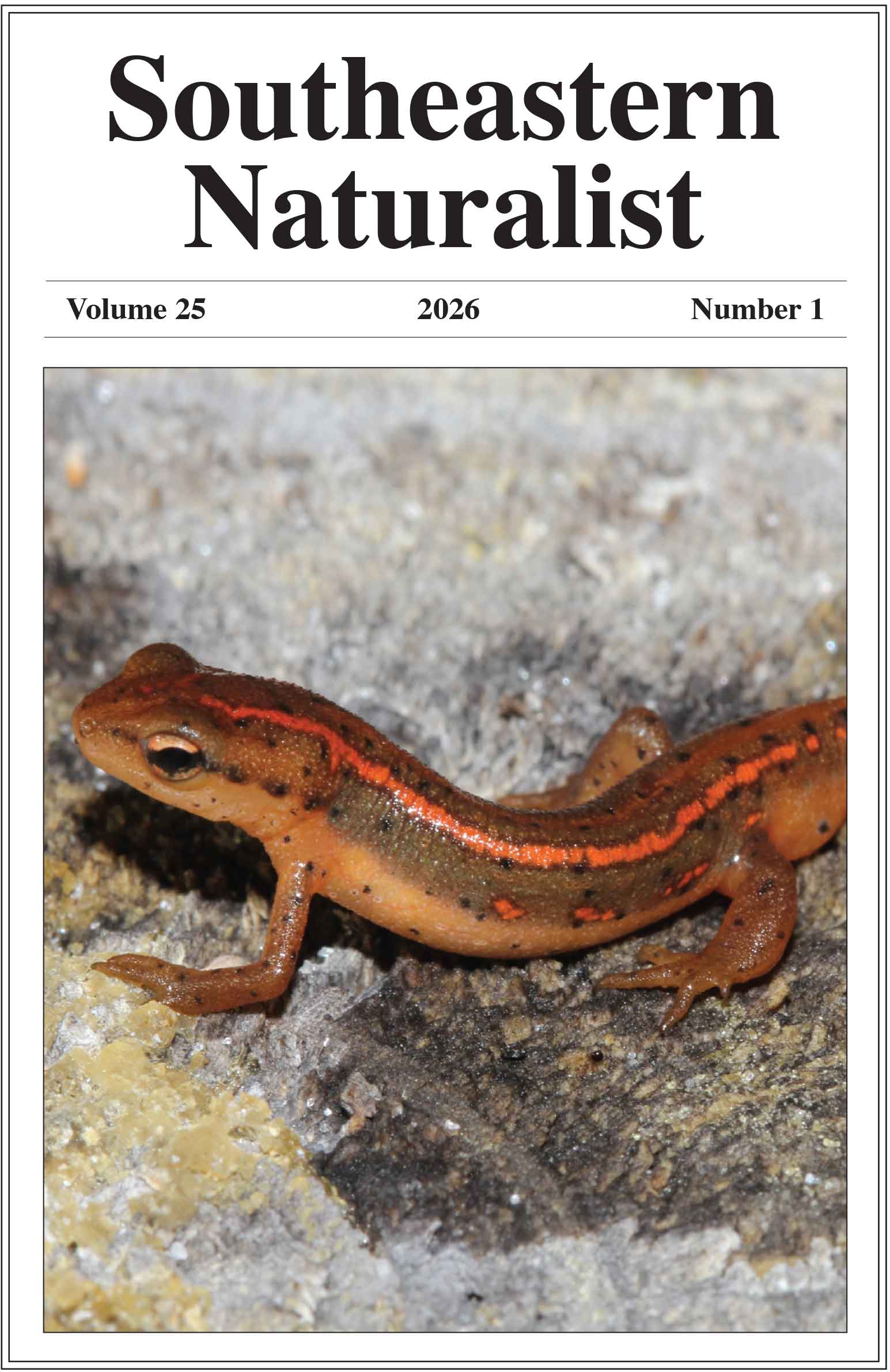
Check out SENA's latest Monograph and current Special Issue in progress:









 The Southeastern Naturalist is a peer-reviewed journal that covers all aspects of natural history within the southeastern United States. We welcome research articles, summary review papers, and observational notes.